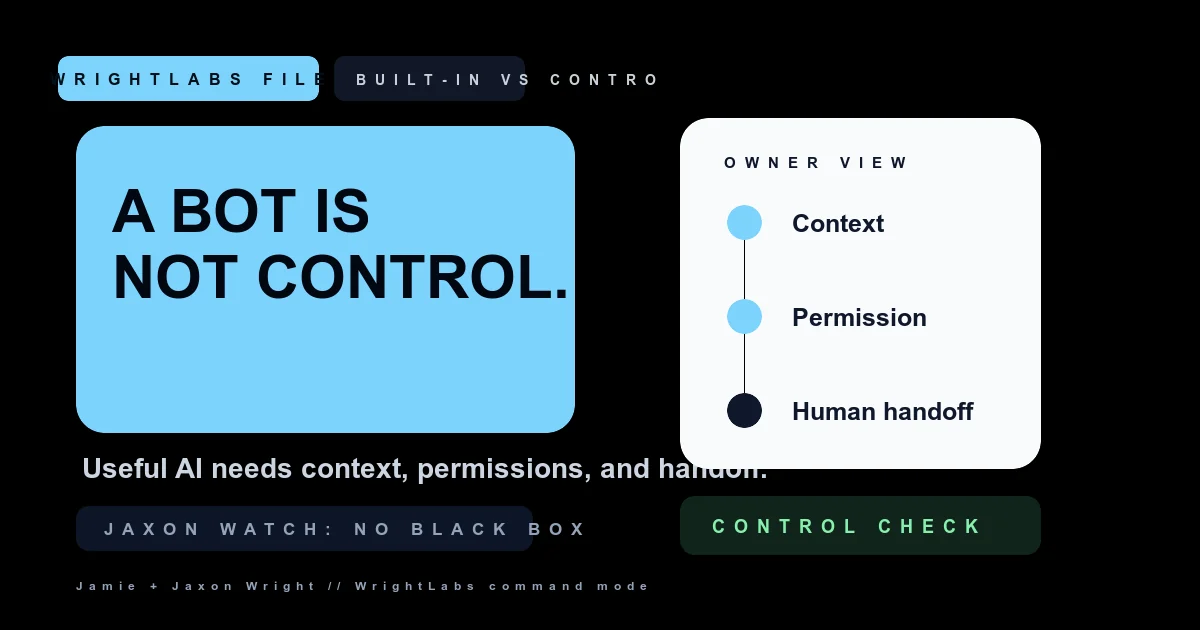
GoHighLevel AI is useful for native platform tasks, but Keel is designed as an operator control layer around AI actions. The difference is scope: built-in tools help inside specific features, while Keel gives an AI assistant governed access to contacts, opportunities, notes, workflows, and reporting.
What this search is really asking
People searching for gohighlevel ai are rarely looking for a vocabulary lesson. They are trying to fix a business leak: slow response, weak routing, messy follow-up, unclear compliance state, or a dashboard that hides the real bottleneck. That is why this page treats the keyword as an operating problem, not a content topic.
The built-in AI question is usually framed as feature versus feature. Operators should frame it as operating model: what can the AI see, what can it change, what is logged, and who owns the outcome? For GHL agencies and operators evaluating AI tooling, the practical question is whether the system can turn intent into a clean next step before the opportunity gets cold. In 2026, that means the CRM, AI layer, human handoff, and reporting loop need to behave like one system.
Two concrete facts shape the work: HighLevel workflows are trigger-and-action systems, and owners care about booked outcomes more than automation volume. The right build is not louder automation. It is a smaller number of well-controlled moves that create visibility: who came in, what they need, who owns the next step, and whether the next step happened.
AI is only useful when it can see enough, do enough, and be checked fast.
The WrightLabs system view
Use native AI where the platform gives you a tight task. Use Keel when the operator wants AI to investigate a pipeline, repair data, summarize conversations, or coordinate multiple HighLevel actions. This is where the WrightLabs systems philosophy matters: build the workflow around the decision the owner or manager needs to make, then let the automation serve that decision.
In practice, the AI control layer has five jobs. First, it captures the event cleanly. Second, it enriches the record with context. Third, it decides whether the next move is AI, human, or both. Fourth, it writes the result back to the CRM. Fifth, it reports the outcome in language an operator can use on Monday morning.
For the home-service and GHL-operator side, WrightLabs systems show the same speed-to-lead and pipeline-control ideas in shipped operating builds. The WrightLabs GHL MCP is the control layer for governed CRM actions, while Proof gives examples of the operating style behind these recommendations. Browse the full operator brief for the rest of this sprint.
| Operating point | Weak version | WrightLabs standard |
|---|---|---|
| Scope | Feature-local assistance | Account-level operations |
| Data access | What the feature exposes | Tool-scoped reads across CRM objects |
| Actions | Narrow native actions | Controlled write, route, summarize, and report |
| Governance | Feature settings | Operator permissions, logs, and review paths |
The workflow to build first
Start with a narrow workflow before trying to automate the whole business. A narrow workflow is easier to QA, easier to explain to staff, and easier to improve. The first build should make one promise that the team can inspect: a lead is captured, classified, routed, followed up, and reported without disappearing into a personal inbox.
For this topic, WrightLabs would start with a trigger, a context package, an action policy, and a stop condition. The trigger says what starts the workflow. The context package says what the AI or human must know. The action policy says what the system may do. The stop condition says when the workflow is finished, escalated, or suppressed.
AI control layer
trigger: new inquiry, reply, call event, or stale-stage timer
context: source, contact, status, timeline, consent, owner, and last touch
action: classify, summarize, route, message, task, or escalate
stop: booked, disqualified, opted out, human review, or nurture
The point of this structure is accountability. If a manager asks why the record moved, the answer should be visible in the contact note, the stage history, and the dashboard. If a customer or prospect says stop, the system should stop. If a rep needs context, the handoff should show the reason for the handoff, not just a mysterious task.
Metrics, risks, and guardrails
The strongest AI systems are not the ones with the longest prompt. They are the ones with the clearest permission model and the cleanest feedback loop. A good metric is not just something that makes a chart look alive. It should help an operator choose a fix: change routing, rewrite the first message, adjust staffing, clean a data source, or remove a workflow that creates noise.
The highest-risk version of gohighlevel ai is the version that hides assumptions. If the workflow assumes consent, assumes the right owner, assumes a plan type, assumes a service area, or assumes a rep followed up, the system will eventually create a bad handoff. The better version makes those assumptions visible and reviewable.
The strongest AI systems are not the ones with the longest prompt. They are the ones with the clearest permission model and the cleanest feedback loop.
Owner checklist
- Use native tools for narrow tasks.
- Use a control layer for cross-object decisions.
- Treat logs as part of the product.
- Make the owner-visible metric match the real business outcome, not the easiest field to chart.
- Review low-confidence AI actions weekly until the workflow is stable.
How to turn this into qualified traffic
This post is part of a two-track WrightLabs SEO system. Track one attracts GHL operators, home-service owners, and agency builders who need implementation help now. Track two attracts Medicare, FMO, life-insurance, and turning-65 traffic that can feed advisor workflows, content engines, and compliant follow-up systems.
The business value is in the bridge between education and execution. A reader who understands gohighlevel ai should be able to see the workflow gap in their own operation. The page should not ask them to buy a vague AI product. It should invite them into a concrete build conversation about the workflow, dashboard, or front desk system that fixes the leak.
The implementation note is simple: make one source of truth before adding more channels. If contacts, calls, forms, messages, agent tasks, and manager notes live in different places, every new automation multiplies the confusion. If those signals land in one governed CRM path, AI can help summarize, route, and recover work without becoming another disconnected tool for the team to babysit.
Built-In AI vs Control Layer Scorecard
Score context depth, permission boundaries, CRM write-back, confidence rules, logs, and human handoff quality. Separate useful AI from a chat widget wearing an operator hat.
For a related operating angle, read The GoHighLevel AI Workflow Guide and Keel vs Zapier for GoHighLevel Operators. Those posts connect this topic to the broader WrightLabs architecture.
FAQ
Bottom line
Why an MCP control layer beats the built-in bot for operators. The move is to make the workflow specific enough to inspect and simple enough for the team to trust. If the system improves speed, routing, compliance context, or manager visibility, it can turn search traffic into a real sales conversation instead of another pageview.